Luxury Fashion: The Complete Guide to Timeless Style, Trends & Modern Elegance
Luxury fashion is more than wearing an expensive label. It is a way of expressing personality, confidence, craftsmanship, and an appreciation for exceptional design. From beautifully tailored clothing and sophisticated handbags to fine jewelry, watches, and carefully selected accessories, luxury fashion brings together creativity and quality in a way that can make everyday style feel extraordinary.
Today, the meaning of luxury fashion is also changing. Traditional designer collections continue to influence the industry, while newer movements such as quiet luxury, minimalist dressing, timeless wardrobes, sustainable craftsmanship, and modern street style are reshaping what people consider luxurious.
Whether you are already passionate about designer fashion or simply want to understand how to create a more refined personal style, knowing the fundamentals of luxury fashion can help you make better choices.
This guide explores the world of luxury fashion, including its defining characteristics, current trends, wardrobe essentials, accessories, styling principles, and practical ways to develop a sophisticated look.
What Is Luxury Fashion?
Luxury fashion refers to clothing, accessories, footwear, jewelry, watches, and other fashion products positioned at the premium end of the market. These products are often distinguished by high-quality materials, craftsmanship, distinctive design, attention to detail, heritage, exclusivity, and brand reputation.
However, luxury is not determined by price alone.
A high price does not automatically make something stylish or timeless. True luxury often comes from the combination of thoughtful design, excellent construction, carefully selected materials, and a strong creative identity.
Luxury fashion can therefore mean different things to different people.
For some, it means owning an iconic designer handbag. For others, it may mean a perfectly tailored coat, handmade shoes, a beautiful watch, or a minimalist wardrobe built around exceptional pieces.
The modern definition of luxury is increasingly connected to quality over quantity.
Why Luxury Fashion Continues to Influence Style
Fashion changes constantly, but luxury fashion has a unique ability to influence the direction of the wider industry.
Designer collections frequently introduce silhouettes, materials, colors, styling concepts, and cultural ideas that eventually appear throughout mainstream fashion.
Luxury fashion also creates a connection between clothing and art. Designers use collections to communicate ideas, experiment with proportions, reinterpret historical references, and create new visual identities.
This is one reason luxury fashion remains influential even when individual trends change.
A particular color may become popular for one season, while a beautifully constructed coat or classic leather bag can remain relevant for many years.
The strongest luxury pieces often balance innovation with longevity.
The Difference Between Luxury Fashion and Expensive Fashion
Luxury fashion and expensive fashion are not always the same thing.
An expensive item can have a high price without offering exceptional design or construction. Luxury fashion, by contrast, usually places greater emphasis on the complete experience surrounding a product.
This can include:
- Material quality
- Construction and craftsmanship
- Design originality
- Brand heritage
- Attention to detail
- Limited availability
- Product longevity
- Presentation and customer experience
A luxury wardrobe does not need to contain dozens of designer items.
In fact, a carefully selected collection of versatile, high-quality pieces can often create a more sophisticated appearance than a wardrobe filled with logos and constantly changing trends.
Timeless Luxury Style
One of the most enduring ideas in luxury fashion is timeless style.
Timeless fashion does not mean boring or old-fashioned. Instead, it refers to pieces and styling choices that remain attractive beyond a single season.
Classic tailoring, refined neutral colors, quality leather accessories, elegant footwear, and well-constructed outerwear are examples of pieces that can form the foundation of a timeless wardrobe.
The key is versatility.
A sophisticated blazer can be styled with tailored trousers for a polished look, worn over denim for a relaxed outfit, or paired with a simple dress for an evening occasion.
Similarly, a high-quality handbag can complement different outfits rather than being purchased for one specific trend.
Quiet Luxury and the New Definition of Elegance
Quiet luxury has become one of the most recognizable modern fashion movements.
Instead of relying heavily on large logos or obvious branding, quiet luxury emphasizes understated design, quality materials, refined tailoring, neutral colors, and subtle details.
The philosophy is simple: the quality of an item should speak for itself.
Common characteristics of quiet luxury include:
- Minimal branding
- Clean silhouettes
- Neutral and earthy colors
- Excellent tailoring
- High-quality fabrics
- Simple accessories
- Classic footwear
- Attention to fit
The appeal of quiet luxury comes partly from its versatility. These pieces can be combined easily and often transition between professional, casual, and formal settings.
Quiet luxury also demonstrates an important principle of modern style: looking sophisticated does not require wearing the most recognizable logo.
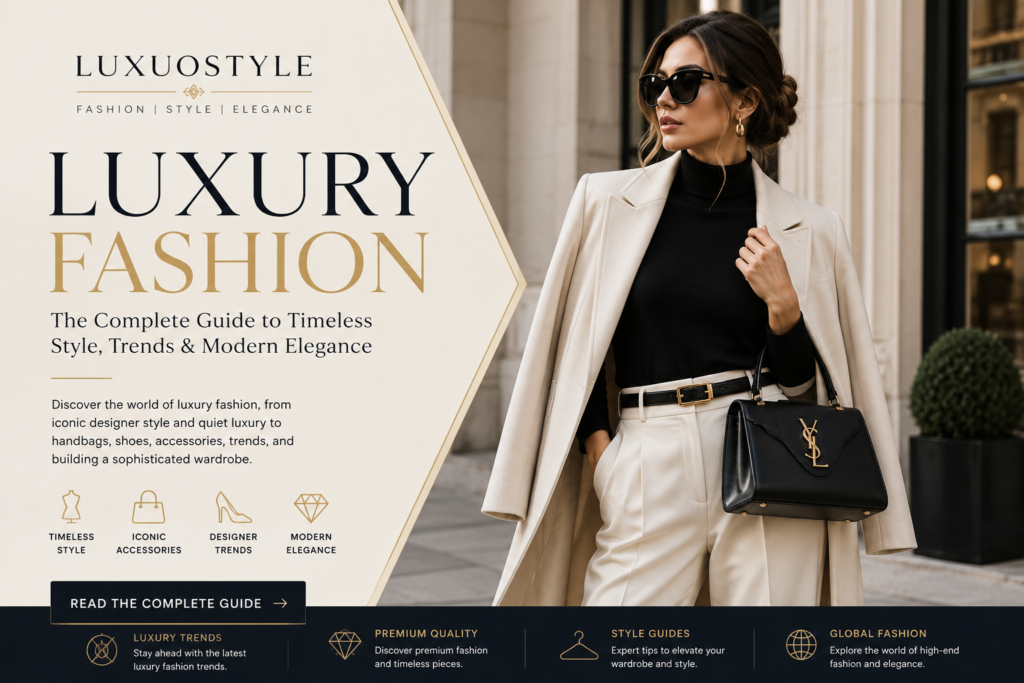
Luxury Fashion Trends
Luxury fashion trends change from season to season, but several broader movements continue to influence modern dressing.
1. Refined Minimalism
Minimalist fashion focuses on clean lines, thoughtful proportions, and a limited visual palette.
Instead of combining many competing elements, minimalist luxury allows one or two strong pieces to become the focus of an outfit.
2. Modern Tailoring
Tailoring remains one of the strongest foundations of luxury fashion.
Structured blazers, elegant trousers, long coats, waistcoats, and tailored dresses can instantly create a polished appearance.
Modern tailoring is also becoming more flexible, with relaxed silhouettes and oversized proportions appearing alongside traditional fitted designs.
3. Elevated Everyday Dressing
Luxury fashion is increasingly moving beyond formal occasions.
A refined knit, premium denim, tailored jacket, elegant sneakers, and a sophisticated handbag can create an elevated everyday outfit without appearing overdressed.
4. Statement Accessories
Accessories can transform a simple outfit.
A distinctive handbag, elegant sunglasses, fine watch, jewelry, or carefully chosen shoes can provide personality while keeping the clothing relatively simple.
5. Sustainable Luxury
Sustainability is becoming increasingly important to fashion consumers.
Long-lasting products, responsible material choices, repairability, vintage fashion, resale markets, and thoughtful purchasing are all contributing to a broader conversation about what luxury should mean in the future.
Luxury Fashion for Women
Women’s luxury fashion covers a wide range of aesthetics, from minimalist tailoring and classic elegance to experimental runway-inspired dressing.
A sophisticated women’s wardrobe can include versatile foundations such as:
- Tailored blazer
- Well-fitted trousers
- Elegant dress
- Premium knitwear
- Classic coat
- Quality handbag
- Refined flats or heels
- Clean sneakers
- Sunglasses
- Minimal jewelry
The goal is not to follow every trend.
Instead, women can combine timeless foundations with a few contemporary pieces to create a wardrobe that feels current without becoming outdated quickly.
For example, a classic tailored blazer can be paired with modern denim, while a simple dress can be refreshed with contemporary jewelry and footwear.
Luxury Fashion for Men
Men’s luxury fashion has also evolved considerably.
Traditional tailoring remains important, but modern men’s style increasingly combines formal and casual elements.
A contemporary luxury wardrobe may include:
- Tailored suit
- Structured blazer
- Premium shirt
- Fine knitwear
- Tailored trousers
- Quality denim
- Leather shoes
- Minimal sneakers
- Classic watch
- Leather belt
- Refined outerwear
Fit is particularly important.
Even a simple outfit can look sophisticated when the proportions are right. A well-fitted jacket, clean trousers, quality shoes, and understated accessories can create a stronger impression than an outfit overloaded with branding.
Luxury Clothing: What Makes a Piece Worthwhile?
When considering luxury clothing, look beyond the label.
Start by examining the fabric and construction. Check how the garment feels, how the seams are finished, how the buttons and fastenings are attached, and whether the overall structure supports the intended silhouette.
Fit is equally important.
A beautifully designed garment can lose much of its visual impact if the proportions are wrong.
Before purchasing a luxury item, consider:
Is it versatile?
Can you style it with multiple pieces already in your wardrobe?
Is the design likely to remain relevant?
A dramatic seasonal piece can be exciting, but classic designs often provide greater long-term value.
Does the quality justify the price?
Luxury should not simply mean expensive. Consider craftsmanship, materials, construction, and expected longevity.
Does it fit your personal style?
The best luxury wardrobe is one that reflects the person wearing it.
Luxury Handbags
Handbags remain one of the most recognizable categories within luxury fashion.
A handbag can function as both a practical accessory and a major visual element of an outfit.
When choosing a luxury handbag, consider shape, size, material, color, hardware, functionality, and how frequently you expect to use it.
Neutral colors such as black, brown, cream, beige, and deep tones are often versatile because they work with a wide variety of outfits.
However, a statement handbag can also be an excellent way to introduce personality into a minimalist wardrobe.
The most important factor is not simply whether a bag is recognizable.
It is whether the design works for your lifestyle and personal aesthetic.
Luxury Shoes
Shoes have the ability to completely change the character of an outfit.
A tailored outfit can appear more formal with polished leather shoes, while refined sneakers can create a contemporary and relaxed appearance.
Luxury footwear can include:
- Leather loafers
- Elegant pumps
- Ankle boots
- Tall boots
- Minimal sneakers
- Sandals
- Statement heels
- Classic dress shoes
Comfort should not be ignored.
A beautiful pair of shoes that cannot be worn comfortably is unlikely to become a useful part of your wardrobe.
Luxury Watches and Jewelry
Jewelry and watches provide another way to express luxury without changing an entire outfit.
A simple watch can add structure to a tailored look, while a delicate necklace or pair of earrings can add elegance to a minimalist outfit.
The modern approach to luxury jewelry is not limited to large or highly visible pieces.
Layering subtle jewelry, mixing textures, and choosing pieces with personal meaning can create a more individual style.
The same principle applies to watches.
A well-designed timepiece can function as both a practical object and an important part of personal style.
How to Build a Luxury Wardrobe
Building a luxury wardrobe does not have to happen overnight.
In fact, buying too many pieces at once can make it difficult to establish a consistent personal style.
A better approach is to build gradually.
Step 1: Define Your Personal Style
Before shopping, identify the colors, silhouettes, materials, and aesthetics you naturally prefer.
Do you prefer minimalist fashion?
Classic tailoring?
Modern street style?
Romantic elegance?
Bold statement pieces?
Understanding your style makes future purchases more intentional.
Step 2: Start With Foundations
Build around versatile essentials.
A high-quality jacket, trousers, knitwear, shoes, and everyday bag can create many combinations.
Step 3: Add Statement Pieces
Once your foundations are established, introduce distinctive pieces.
This might be a bold handbag, designer jacket, statement jewelry, unusual footwear, or a distinctive coat.
Step 4: Focus on Fit
Good fit can elevate almost any garment.
If necessary, professional tailoring can make a major difference.
Step 5: Buy With Longevity in Mind
Ask yourself whether you will still enjoy wearing the piece several years from now.
This simple question can help reduce impulse purchases.
How to Style Luxury Fashion Without Looking Overdone
Luxury fashion works best when the outfit feels intentional rather than excessive.
One useful styling principle is to balance statement pieces with simpler elements.
For example, if you are wearing a distinctive designer jacket, keep the rest of the outfit relatively clean.
If the handbag is the main statement, consider choosing understated clothing.
This creates visual balance.
Another important principle is proportion.
Combining an oversized jacket with more streamlined trousers, or a relaxed top with structured bottoms, can create a modern silhouette.
The goal is not perfection.
The goal is harmony.
The Role of Color in Luxury Style
Color has a powerful influence on how an outfit is perceived.
Neutral shades are strongly associated with understated luxury because they are versatile and allow texture, tailoring, and craftsmanship to become more visible.
Popular luxury-inspired palettes often include:
- Black
- White
- Cream
- Beige
- Camel
- Chocolate brown
- Navy
- Grey
- Olive
- Burgundy
However, luxury fashion is not limited to neutrals.
A carefully selected bold color can become the focal point of an otherwise understated outfit.
The key is balance.
Luxury Street Style
Luxury fashion no longer belongs exclusively to formal environments.
Street style has become an important part of contemporary fashion culture, blending designer pieces with casual clothing and everyday footwear.
A luxury street-style outfit might combine a tailored coat with denim, a designer bag with sneakers, or premium knitwear with relaxed trousers.
This approach makes luxury fashion feel more accessible and personal.
It also demonstrates that sophistication can coexist with comfort.
Vintage and Pre-Owned Luxury Fashion
The growing interest in vintage and pre-owned fashion has changed the way many consumers approach luxury.
Vintage pieces can offer unique designs that are difficult to find in current collections.
Pre-owned fashion can also provide access to established designer pieces while encouraging consumers to think more carefully about longevity and reuse.
When purchasing pre-owned luxury products, authenticity and condition are important considerations.
Buyers should research the seller, examine product details carefully, understand return policies, and seek professional authentication where appropriate for high-value items.
Sustainable Luxury Fashion
The future of luxury fashion is increasingly connected to sustainability.
A luxury item that lasts for many years can challenge the culture of disposable fashion.
Consumers are paying greater attention to material sourcing, production practices, repair services, resale, vintage shopping, and product longevity.
Sustainable luxury is therefore not simply about buying products described as environmentally friendly.
It can also involve buying less, choosing better, maintaining what you own, repairing items instead of immediately replacing them, and considering secondhand options.
How to Create a Luxury Look on a Smaller Budget
You do not need an entire designer wardrobe to achieve a luxurious aesthetic.
Start with the fundamentals.
Prioritize clean silhouettes, good fit, quality-looking materials, coordinated colors, and well-maintained accessories.
A simple monochrome outfit can look sophisticated when the proportions are strong.
You can also invest in one quality accessory at a time rather than purchasing many inexpensive pieces.
For example, a well-made handbag or pair of shoes can elevate several affordable outfits.
Luxury style is ultimately about how pieces work together, not simply how much they cost.
Common Luxury Fashion Mistakes
Even expensive clothing can look less sophisticated when styling choices are poorly balanced.
Some common mistakes include:
Wearing Too Many Logos
Multiple prominent logos can compete for attention.
Ignoring Fit
Price cannot compensate for poor proportions.
Following Every Trend
Constantly chasing trends can make a wardrobe feel inconsistent.
Buying Without a Plan
A beautiful piece is not necessarily a useful piece.
Neglecting Maintenance
Luxury products still require proper cleaning, storage, repairs, and care.
Confusing Price With Style
An expensive item does not automatically create a sophisticated outfit.
The Future of Luxury Fashion
Luxury fashion is entering an interesting period.
Consumers are becoming more informed about craftsmanship, sustainability, authenticity, resale, and the history behind products.
At the same time, technology is changing how people discover, experience, and purchase fashion.
Digital fashion experiences, social media, online luxury marketplaces, artificial intelligence, personalization, and virtual shopping are influencing the relationship between brands and consumers.
Yet some elements of luxury are unlikely to disappear.
Craftsmanship, creativity, quality, identity, and emotional connection remain central to the meaning of luxury.
The future may therefore combine advanced technology with a renewed appreciation for timeless design.
Final Thoughts
Luxury fashion is ultimately about more than designer labels and expensive products.
It is about understanding quality, developing personal style, appreciating craftsmanship, and making intentional choices.
The strongest luxury wardrobes are not necessarily the largest. They are the wardrobes where every piece has a purpose.
Whether your style is defined by quiet luxury, classic tailoring, contemporary streetwear, statement accessories, or timeless elegance, the most important principle is to choose pieces that feel authentic to you.
Fashion will continue to change, but great style has a longer life.
Luxury fashion at its best combines quality, confidence, creativity, and individuality—creating a style that feels sophisticated today while remaining relevant tomorrow.
Frequently Asked Questions About Luxury Fashion
What is luxury fashion?
Luxury fashion refers to premium clothing, accessories, footwear, jewelry, watches, and related products that emphasize design, craftsmanship, materials, exclusivity, and brand heritage.
What is quiet luxury?
Quiet luxury is an understated approach to dressing that focuses on quality, refined tailoring, subtle details, neutral colors, and minimal visible branding.
How can I create a luxury fashion look?
Start with well-fitting clothing, clean silhouettes, coordinated colors, quality accessories, and simple styling. You do not need to wear multiple designer logos to create a sophisticated appearance.
What are luxury fashion essentials?
Common essentials include tailored outerwear, quality trousers, refined knitwear, versatile footwear, a sophisticated handbag or leather accessory, and understated jewelry or a watch.
Is luxury fashion only for wealthy people?
No. Luxury-inspired style can be achieved through thoughtful styling, good fit, quality basics, secondhand shopping, and carefully selected accessories. Luxury fashion itself includes products at many different price points.
Why is craftsmanship important in luxury fashion?
Craftsmanship influences the construction, durability, appearance, and overall experience of a fashion product. It is one of the characteristics that can distinguish premium products from mass-produced alternatives.
Is quiet luxury still relevant?
Quiet luxury remains an influential approach to modern style because it emphasizes versatility, understated design, quality, and timeless dressing rather than relying primarily on visible branding.
How do I build a luxury wardrobe?
Define your personal style first, then gradually invest in versatile essentials. Focus on fit, quality, longevity, and pieces that can be styled in multiple ways.
Can luxury fashion be sustainable?
Yes. Buying fewer durable pieces, maintaining and repairing clothing, choosing vintage or pre-owned items, and considering product longevity can all contribute to a more sustainable approach to luxury fashion.
What makes an outfit look luxurious?
Strong fit, balanced proportions, coordinated colors, quality materials, clean styling, and thoughtful accessories can make an outfit appear more refined and sophisticated.
Explore More From LuxuoStyle
Discover more fashion inspiration, styling ideas, luxury trends, designer fashion, accessories, and modern wardrobe guides with LuxuoStyle—your destination for exploring the evolving world of fashion and personal style.